01 / SYSTEM OWNER

I started with a
blank terminal.

I am Aryan Vekariya - computer science student building across software, systems, and robotics. I learn by building: entering unfamiliar territory, finding the fundamentals, and carrying each hard-won lesson into the next system.

Explore my work
STUDYING
CS Honours + Mathematics
BUILDING SINCE
2023
CURRENT FOCUS
Software + Systems + Robotics
AV-DOS://HOME● ONLINE

Not a gallery.
A record of choices.

Each project records the starting point, the unfamiliar territory, and the lesson that travelled into the next build.

WHERE I BEGAN

Early work belongs in the story.

Course projects, hackathons, research reports, and experiments are presented honestly: what I tried, where it became difficult, and what I carried forward.ARCHIVE STATUS / 11 BUILDS MOUNTED

PROJECT INDEX / 11 BUILDS / NEWEST TO OLDEST

The trail, not just the trophies.

Filter by the kind of problem. Open only the build notes you want. Every card comes from the same typed data file that powers the terminal.

Showing 6 projects

10

Creative / 2026

Fall 2026

Personal project

AV-DOS

This portfolio: a personal operating system with a calm GUI and a command line that tell the same story in different ways.

STARTED WITHA vague idea for a website that felt like a personalized operating system
LEFT WITHInformation architecture, progressive disclosure, interaction design, and disciplined visual systems
Open build notes
WHAT I BUILT
A responsive, accessible portfolio with a data-driven project archive, keyboard navigation, CLI commands, themes, and an Indian print-inspired visual language.
WHY
A portfolio should demonstrate how I think, not merely list the things I have made.
HARDEST PART
Making the experience memorable without turning the operating-system metaphor into a maze.
OUTCOME
Created a living home for the full learning journey, designed to grow one data entry at a time.
  • React
  • TypeScript
  • Next.js
  • CSS
  • Interaction Design
09

Robotics / Summer 2026

SUMMER RESEARCH ASSISTANTSHIP

Supervised by Dr. Daniel Rea

Move-Sets for Robot Teleoperation

An HCI research project and hardware setup investigating whether reusable and predefined move-sets can make robot teleoperation more expressive and practical.

STARTED WITHGeneral software development experience, but zero hands-on experience with hardware integration, formal HCI research, or user study design.
LEFT WITHROS 2, hardware debugging, user study design, qualitative methods, and how to create a participatory workshop where users act as design partners.
Open build notes
WHAT I BUILT
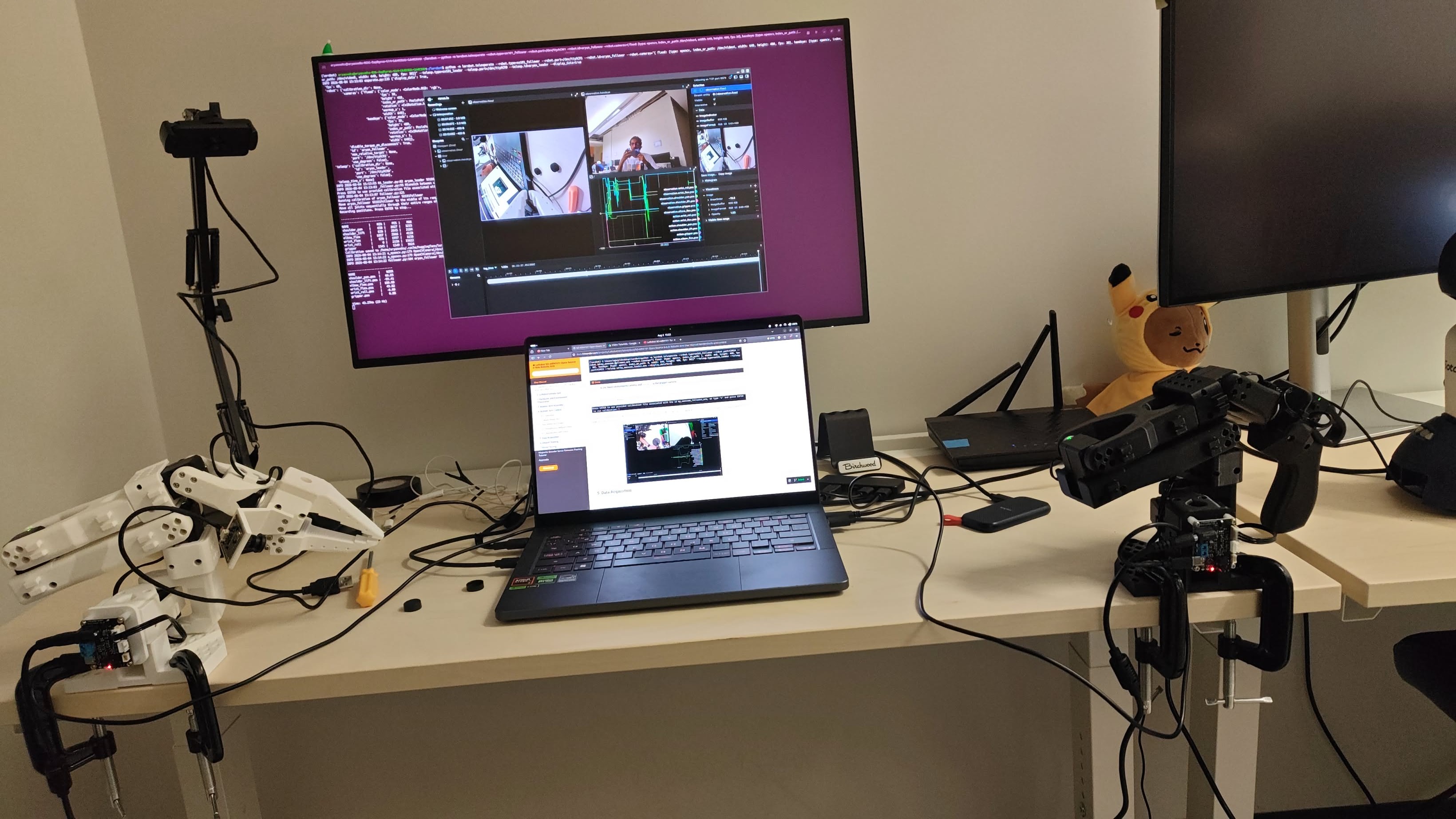
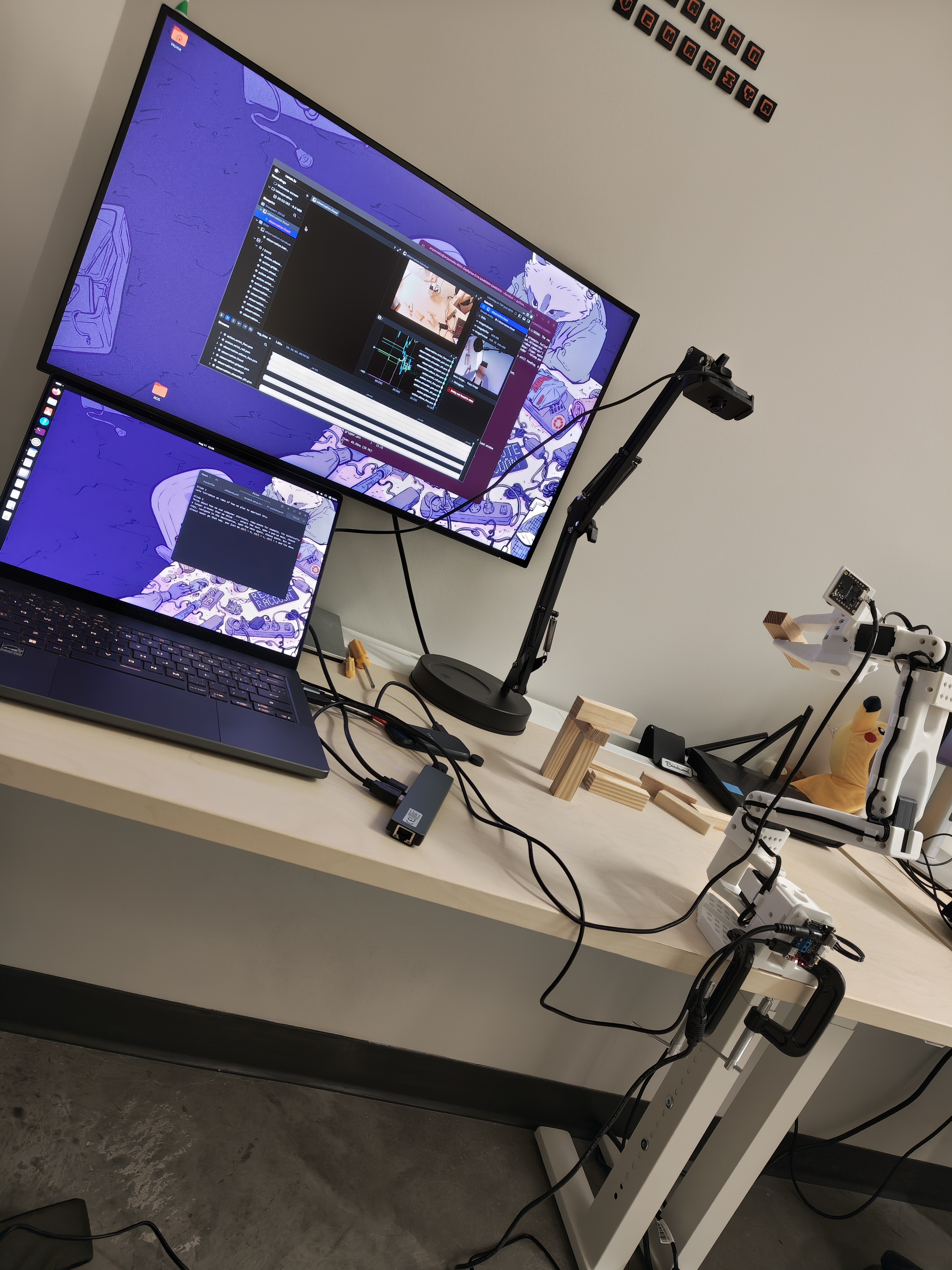
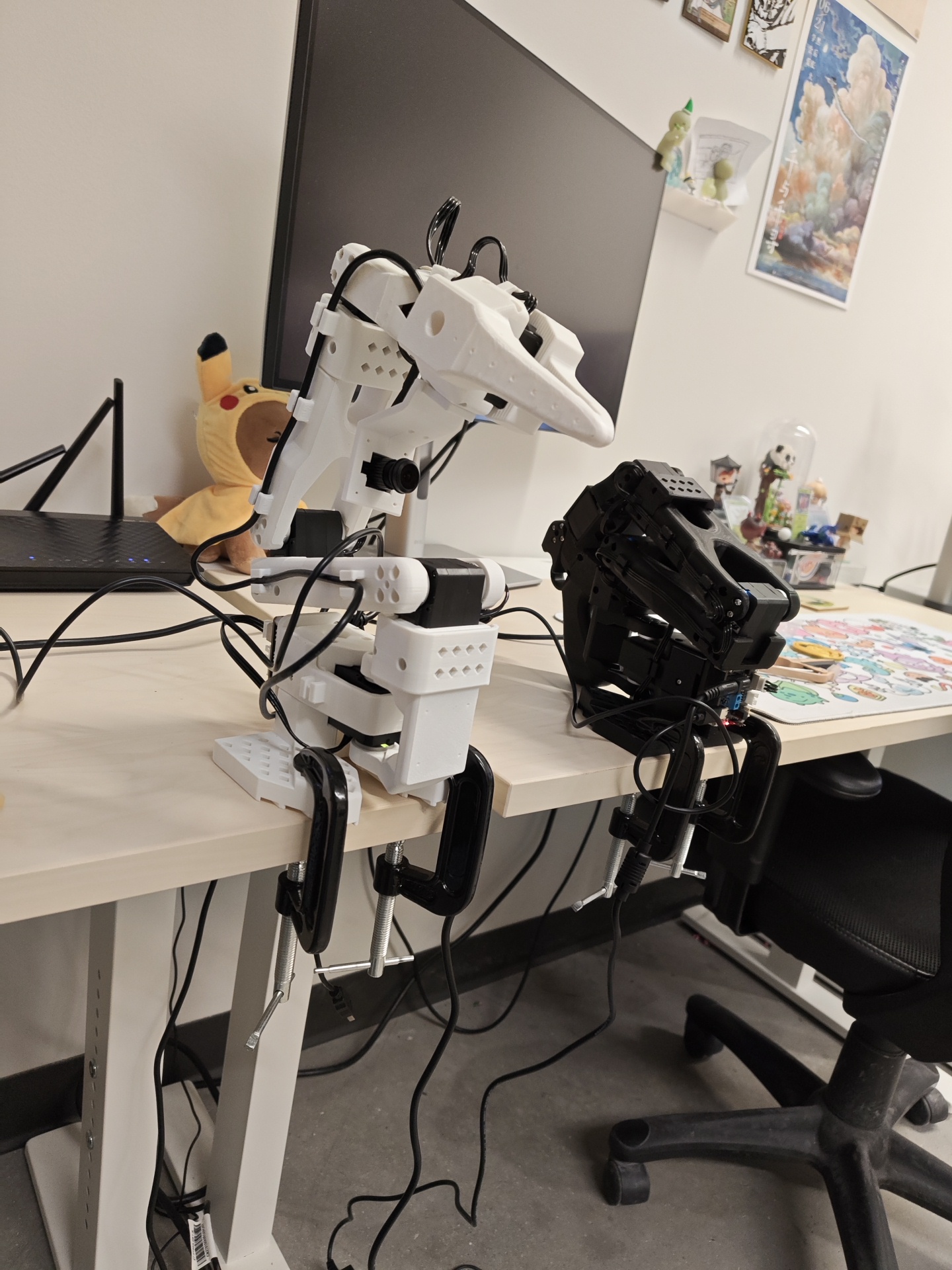
I configured physical SO-ARM101 leader-follower robot arms and explored ROS 2 and Docker environments for a Kinova Gen3 Lite. I also designed a three-hour participatory workshop featuring physical tasks and storyboards to gather user ideas.
WHY
Controlling a robot arm manually is incredibly complicated and exhausting, especially when trying to judge depth through a camera feed. I wanted to explore if packaging common actions into simple, reusable commands could reduce the operator's burden while keeping them in control.
HARDEST PART
Diagnosing hardware and software failures across operating systems and real motors, while simultaneously designing a study that prevents my own engineering ideas from biasing the participants' creativity.
OUTCOME
I successfully configured the physical robot prototypes, submitted a Research Ethics Board application, and developed a complete, pilot-ready workshop where users can test real robots and co-design their own control macros.
  • ROS 2
  • Python
  • Docker
  • C
  • C++
  • Design Worskshops
  • Ubuntu
  • Kinova Gen3 Lite
  • LeRobot
08

Software / Winter 2026

ANDROID PROJECT

Team project

StudyFlow

An Android study planner that helps students organize classes, assignments, exams, and other deadlines in one place.

STARTED WITHJava, and object-oriented programming
LEFT WITHHow to organize an Android app into clear UI, business, and data layers, Agile development practices, SOLID principles, Refactoring, and Testing.
Open build notes
WHAT I BUILT
Worked with a five-person team to create daily, calendar, and upcoming-event views. Students can add, edit, delete, prioritize, and categorize events, attach notes, and track their progress. The app stores everything locally using SQLite.
WHY
We wanted to give students a simple way to see what is coming up and manage their schoolwork without juggling multiple calendars and to-do lists.
HARDEST PART
Keeping the code organized while five people worked on related features. We had to clearly separate responsibilities and improve our error handling so problems were easier to find and test.
OUTCOME
Built a working study planner and learned that good software should be easy to understand, test, and change;- not just functional.
  • Java
  • Android Studio
  • SQLite
  • JUnit
  • Mockito
  • Espresso
  • GitLab
07

Systems / Winter 2026

OPERATING SYSTEMS

Coursework

FAT32 Filesystem Reader

A filesystem reader that inspects and retrieves data directly from a FAT32 disk image.

STARTED WITHC programming and memory-management fundamentals
LEFT WITHFAT32 layout, binary structures, directory traversal, caching, profiling, and defensive parsing
Open build notes
WHAT I BUILT
Commands for reading filesystem information, calculating usable and free space, traversing directories, and retrieving files from raw disk structures.
WHY
To replace the filesystem abstraction with a concrete understanding of how bytes, clusters, and directories are represented.
HARDEST PART
Translating low-level on-disk structures into safe navigation and retrieval logic without higher-level filesystem APIs.
OUTCOME
Built a clearer mental model of what an operating system is doing underneath an ordinary file operation.
  • C
  • FAT32
  • Memory Management
  • Caching
  • gprof
06

Software / Summer 2025

CYBERSECURITY BOOTCAMP WINNER

Team of 2

CyberSentinel

A Chrome extension and web dashboard that help people check suspicious email and website links before opening them.

STARTED WITHPython, JavaScript, and web-development fundamentals
LEFT WITHHow to build Chrome extensions, work with threat-intelligence APIs, evaluate SSL certificate signals, connect multiple backend services, and design with user privacy in mind.
Open build notes
WHAT I BUILT
Worked in a team of two to build a Chrome extension, responsive dashboard, and backend services with Python, Flask, Node.js, and Express. The tool combines VirusTotal threat intelligence with SSL certificate checks to analyze links in near real time.
WHY
We wanted to make link security easier to understand by turning technical threat data into a clear Safe or Risky result.
HARDEST PART
Connecting the extension, dashboard, and backend services while keeping the results quick, easy to understand, and privacy-conscious.
OUTCOME
Delivered a working security tool that clearly explains why a link may be unsafe and won Best Cybersecurity Tool at the bootcamp.
  • Python
  • Flask
  • Node.js
  • Express
  • JavaScript
  • VirusTotal API
05

Systems / Fall 2025

BYZANTINE CONSENSUS

University systems project

Distributed Consensus Network

A multi-node peer-to-peer network built in Python to explore how independent computers agree on shared data even when some nodes are unresponsive or intentionally lying.

STARTED WITHBasic Python syntax and zero prior experience with sockets, networking, or TCP/UDP communication.
LEFT WITHSocket programming, managing concurrent TCP/UDP traffic, the Oral Messages algorithm, failure handling, and how modern distributed systems operate.
Open build notes
WHAT I BUILT
A peer-to-peer system featuring a UDP gossip protocol for node discovery, TCP sockets for client commands, a 67% quorum rule, smart timeouts, and a simulator for 'bad' nodes that intentionally broadcast fake data.
WHY
To understand the chaotic nature of distributed networks and learn how independent computers can securely reach an agreement without relying on a central server.
HARDEST PART
Coordinating information across multiple independent nodes while juggling concurrent network traffic, handling unresponsive peers, and building a system that doesn't freeze when nodes disappear.
OUTCOME
Developed a resilient distributed network that dynamically scales its fault tolerance, gracefully handles timeouts, filters out malicious lies, and safely commits truth to a shared database.
  • Python
  • TCP
  • UDP
  • Sockets
  • select()
  • JSON

Growth is part
of the work.

From programming fundamentals to systems, networks, and real robot hardware: every year added another layer to how I understand computing.

  1. 2023

    FOUNDATIONS

    Learning the grammar of computing

    I began Computer Science at the University of Manitoba with programming, algorithms, mathematics, and software-development fundamentals. Java gave me a starting language; every assignment gave me a new kind of mistake to understand.
    Shift: from no prior roadmap to a repeatable way of learning.
    • Java
    • Algorithms
    • Mathematics
    • Problem Solving
  2. 2024

    BUILDING WITH OTHERS

    Code became a team sport

    Web experiments, CSSA contributions, and a 48-hour game jam pushed me beyond solo assignments. Cooked won the People's Choice Award, but the lasting lesson was how scope, communication, and version control shape a team.
    Shift: from writing programs to shipping a shared experience.
    • Git
    • Godot
    • Web Development
    • Teamwork
  3. 2025

    SYSTEMS EXPANSION

    Applications, networks, data, and machines

    StudyFlow introduced architecture and testing; CyberSentinel made APIs and security tangible; systems projects moved into C, filesystems, networking, and distributed consensus. Robotics, UMSATS, teaching, and community software widened the frame again.
    Shift: from “does it work?” to “how does the whole system behave?”
    • Testing
    • Distributed Systems
    • Databases
    • Robotics
  4. 2026

    ROBOTICS IN PRACTICE

    Software met the physical world

    Hands-on work with ROS 2, Docker, Linux, Kinova, and LeRobot moved debugging beyond the screen. Devices, calibration, permissions, drivers, and real hardware made every layer visible.
    Shift: from debugging software in isolation to tracing failures across hardware and software.
    • ROS 2
    • Docker
    • Linux
    • Robot Hardware

“I learn by building.”

Curiosity is not a line in my skills section. It is the method connecting an Android app, a filesystem, a game jam, and a robot arm.

CURRENTLY
Deepening my systems and robotics foundations through hands-on projects
OPTIMIZING FOR
Clarity, testability, honest learning, and systems that respect their users
TEACHING ME
Explaining mental mathematics to young learners makes precision and empathy inseparable
01

Understand before decorating.

The interface should make the idea clearer, not merely louder.

02

Make it humane.

Good software respects attention, different devices, and different ways of navigating.

03

Show the thinking.

A screenshot matters less than the choices, trade-offs, and lessons behind it.

04

Leave it clearer.

Code, copy, and systems should be easier for the next person to understand - including future me.

EDUCATION / PRIMARY PROCESS

4.11 / 4.5GPA

B.Sc. Computer Science (Honours)

Minor in Mathematics
University of Manitoba
2023 - Present

Open resume PDF

ROLES & EXPERIENCE

May 2025 - April 2026

Course Instructor

UCMAS Winnipeg

Teach certified abacus and mental-math training to students aged 5-13, translating complex processes into steps that different learners can internalize.

Summer 2026

Summer Research Assistant

University of Manitoba

Investigated reusable motion macros for robot teleoperation under the supervision of Dr. Daniel Rea.

SKILL LEDGER / EVIDENCE FIRST

Tools connected to the work.

No percentages and no logo wall. Each technical area points back to the projects that made it useful.

01

Applications

StudyFlow, CyberSentinel, HackAJudge, and deployed community tools

  • Java
  • Python
  • JavaScript/TypeScript
  • React
  • Flask
  • Node.js
  • Android
02

Systems & Networks

FAT32 parsing, processes, threads, sockets, and distributed consensus

  • C
  • C++
  • Bash
  • LC-3 Assembly
  • TCP/UDP
  • Memory
  • Synchronization
03

Data & Intelligence

Relational and graph data, symbolic reasoning, and neural-network interpretability

  • SQLite
  • SQL Server
  • PostgreSQL
  • Neo4j
  • R
  • Prolog
  • CNNs
04

Robotics & Hardware

Real robot setup, teleoperation, calibration, and cross-platform hardware/software debugging

  • ROS 2
  • Docker
  • Ubuntu
  • Kinova
  • LeRobot
  • Device Integration
  • Hardware Debugging

ENGINEERING COMMUNITIES

2024 - Present

Computer Science Students' Association

Website and event-management software, technical planning, and team collaboration.

2025 - Present

University of Manitoba Robotics Club

Embedded-systems discussions, component testing, and hardware/software integration.

2025 - Present

UMSATS

Software and Command Data Handling work for satellite subsystems and mission simulations.

RECOGNITION

  1. 01Undergraduate Research Award
  2. 02Cybersecurity Bootcamp Project Winner
  3. 03Game Jam People's Choice Award
  4. 04Academic Scholarship for Academic Excellence

Have a problem
worth understanding?

Let us build something thoughtful, compare notes on a difficult system, or talk about software that reaches beyond the screen.

vekariyaaryan100@gmail.com